> For the complete documentation index, see [llms.txt](https://docs.aozo.io/llms.txt). Markdown versions of documentation pages are available by appending `.md` to page URLs; this page is available as [Markdown](https://docs.aozo.io/stake/getting-started/bifrost-and-vtokens/bifrost-vs-others.md).
# Bifrost vs Others
## Bifrost's LSTs advantages
{% hint style="info" %}
Have a look to the blog article: [The Feedback and Growth Potential of Bifrost](https://bifrost.io/blog/the-feedback-and-growth-potential-of-bifrost)
{% endhint %}
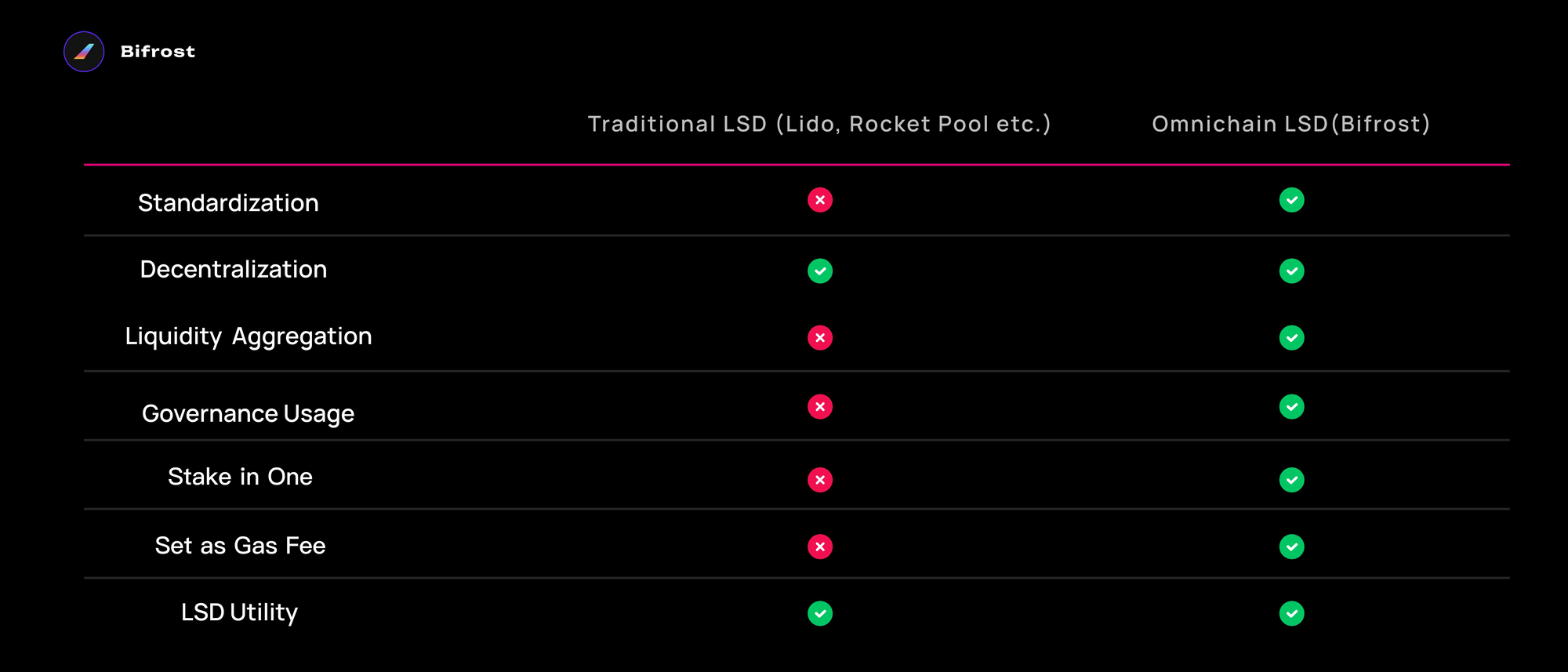
Bifrost, as a blockchain, can provide LSTs with a more diverse omni-chain adaptation scenario:
Bifrost vs Traditional LSTs
* Standardized RPC to be integrated by different consensus.
* Concentrate liquidity on a single spot to support omni-chain applications.
* Retain governance rights.
* All types of tokens can be staked through Bifrost DApp.
* Bifrost LST can be set as Gas Fee.
* Leverage staking
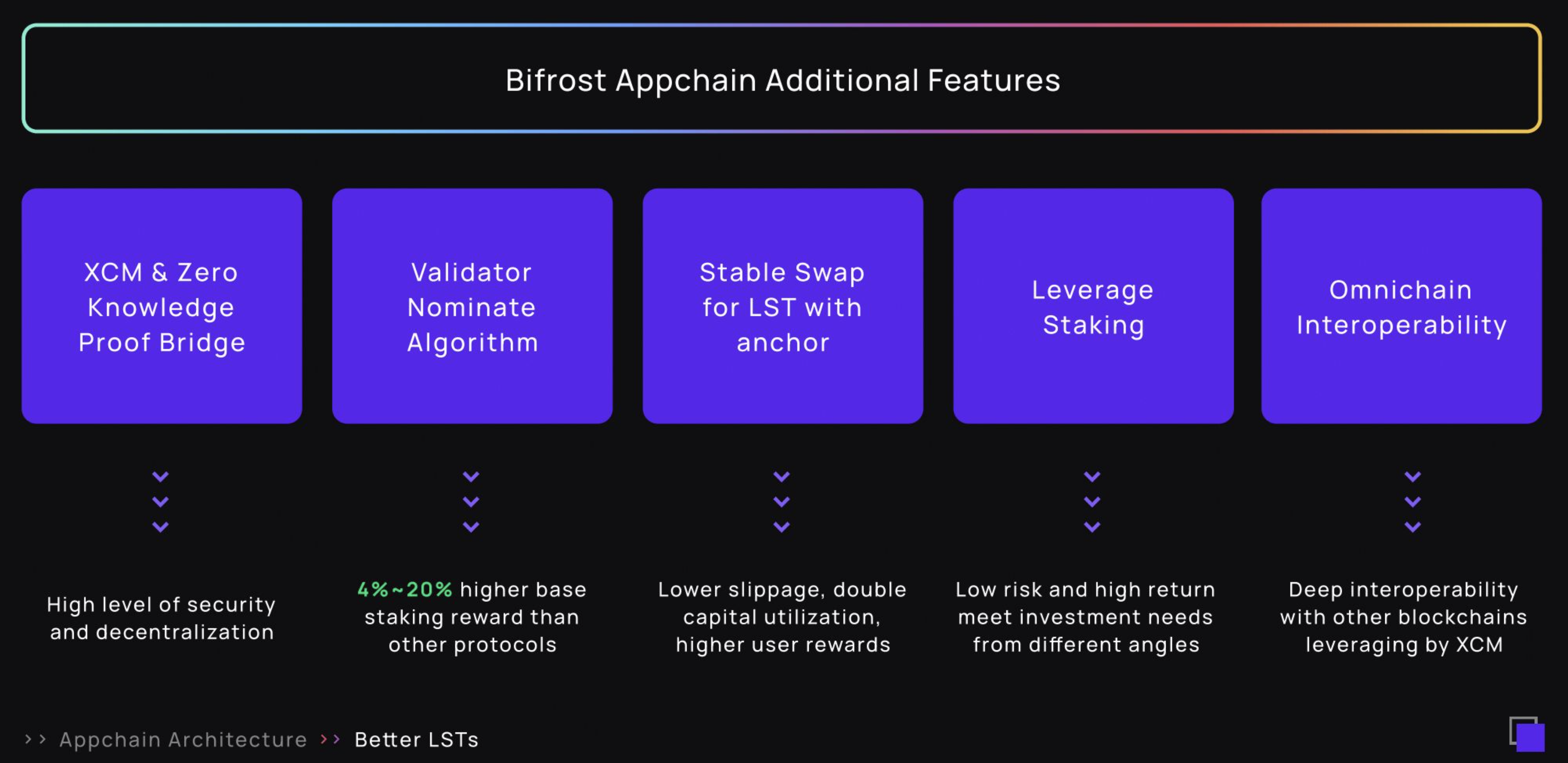
Bifrost's unique features
***
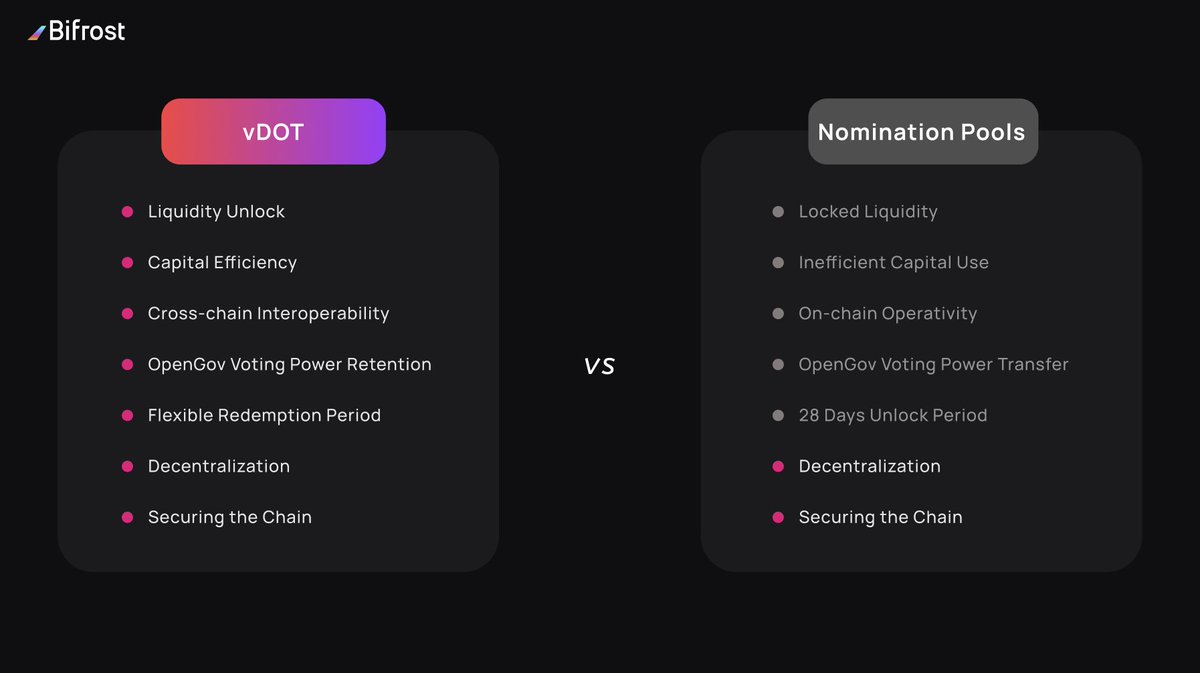
## Bifrost's vDOT vs Nomination pools
***
By using intelligent node filtering, Bifrost can provide a Token base APY that is more competitive than other products. The Defi use case scenario of LSTs makes it easier for users to compound more profits.
> **Many liquid staking projects on the same track directly deploy contracts on other chains without having their own chains. Why does Bifrost build a chain?**
To answer this question, it is necessary to clarify the concept of vTokens in the architectural design: most liquid staking protocol are built on the original chain.
Lido’s ETH liquidity staking protocol is an Ethereum contract implemented in the Solidity language, while Lido’s SOL liquidity staking protocol is a Solana contract implemented in the Rust language. Thus, the native chain for Lido staking derivative, *stETH*, Ethereum derivative, and its native format is ERC-20. Lido’s SOL (native chain) staking derivative is Solana, while the native format is SPL.
The **vToken** adopts a cross-chain minting scheme.
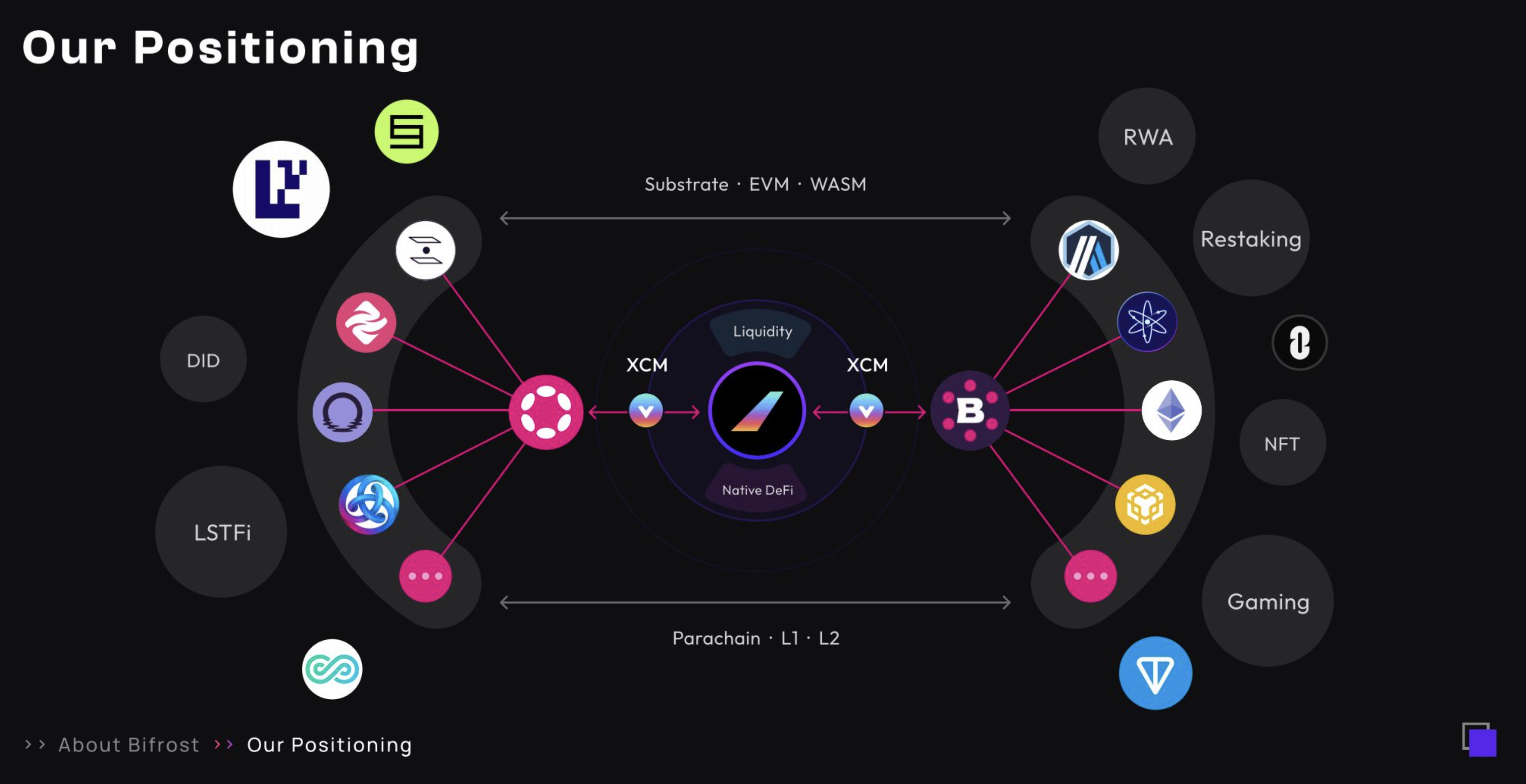
All vTokens are minted on the Bifrost chain. That is to say, all vTokens are on Bifrost chain. Since Bifrost is a Kusama/Polkadot parachain, **all vTokens are native assets of the Dotsama ecosystem**.
> **The future is omni-chain!**
This is one of our fundamental judgement. Based on this, we believe that cross-chain applications will be the main form of dApps in the future, and that cross-chain calls between different applications on different chains will be the norm.
Therefore, Bifrost has designed many of its DeFi products, including the **SLP protocol**, with the ease of cross-chain integration in mind. And we believe that the entire ecosystem (including the heterogeneous chain ecosystem that bridges into it) and XCM-based communications will further **enable cross-chain integration between applications**.
---
# Agent Instructions
This documentation is published with GitBook. GitBook is the documentation platform designed so that both humans and AI agents can read, navigate, and reason over technical content effectively. Learn more at gitbook.com.
## Querying This Documentation
If you need additional information that is not directly available in this page, you can query the documentation by asking a question.
Perform an HTTP GET request on the following URL with the `ask` and `goal` query parameters:
```
GET https://docs.aozo.io/stake/getting-started/bifrost-and-vtokens/bifrost-vs-others.md?ask=&goal=
```
`ask` is the immediate question: it should be specific, self-contained, and written in natural language.
`goal` is what the user is ultimately trying to achieve, the reason they need the answer. Sharing it helps GitBook give you a better, more relevant answer. A goal is most helpful when it describes the outcome the user wants rather than restating the question. For example, with `ask=how do I create an API token`, a goal like `automate deployments from our CI pipeline` lets GitBook tailor the answer to that use case.
The response will contain a direct answer to the question and relevant excerpts and sources from the documentation.
Use this mechanism when the answer is not explicitly present in the current page, you need clarification or additional context, or you want to retrieve related documentation sections.